Choosing the Right Paver Sealing Option for Your Driveway, Patio, or Pool Deck
Sealing your brick or interlocking pavers isn’t just about looks, it’s about protecting your investment. The right sealer can enhance color, prevent stains, reduce weed growth, and extend the life of your pavers for years. But one of the biggest decisions homeowners face is wet look vs. natural finish paver sealing.
Below, we break down the most common paver sealing options, how long they last, how they perform in real-world conditions, and which surfaces they’re best suited for.
What Does Paver Sealing Do?
Paver sealers are designed to:
- Lock in joint sand and reduce erosion
- Protect against oil, grease, rust, and organic stains
- Enhance or preserve color
- Minimize fading from UV exposure
- Reduce weed growth and ant infestation
The difference between sealer types comes down to appearance, texture, and performance.
Wet Look Paver Sealer
Appearance
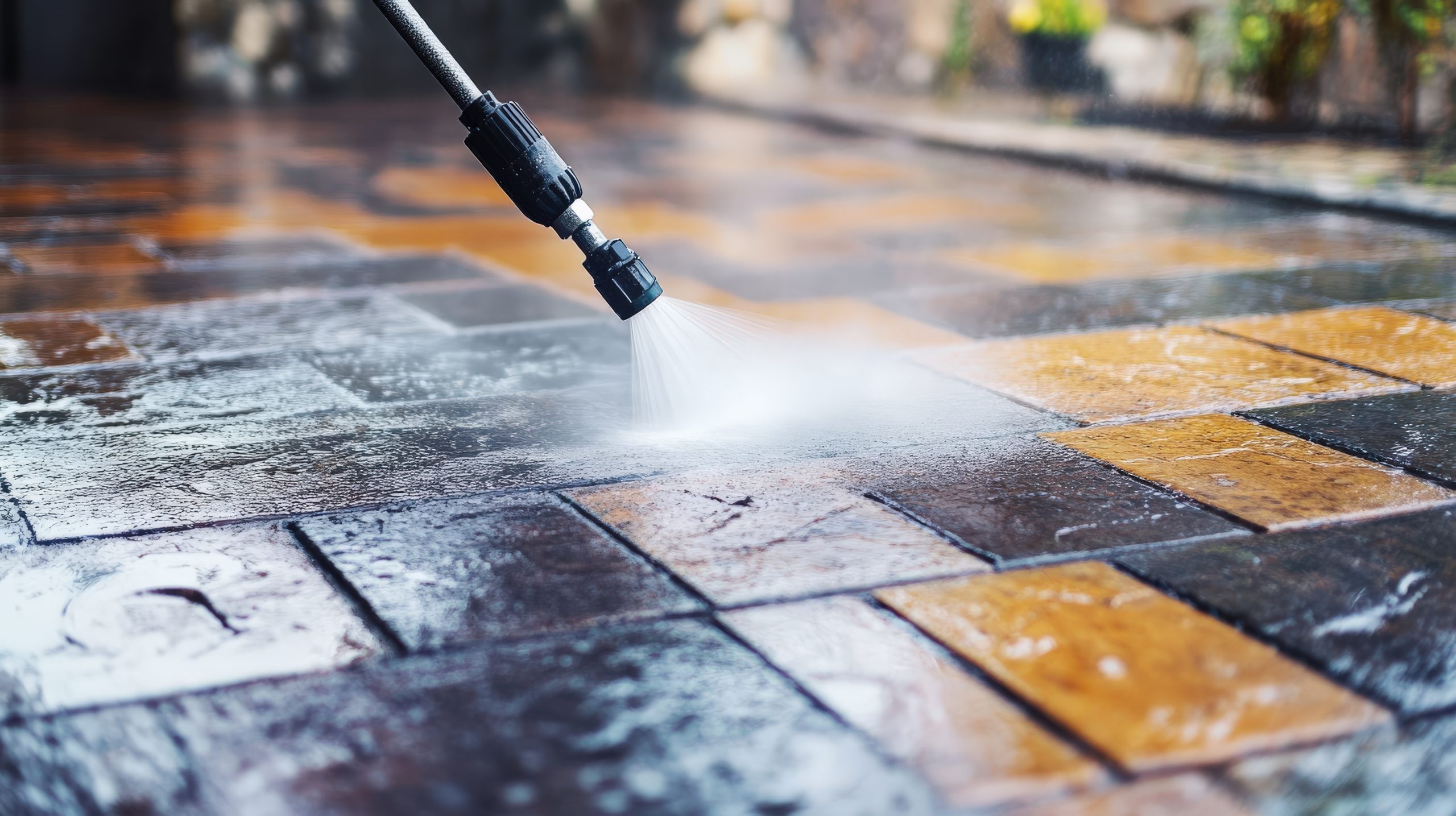
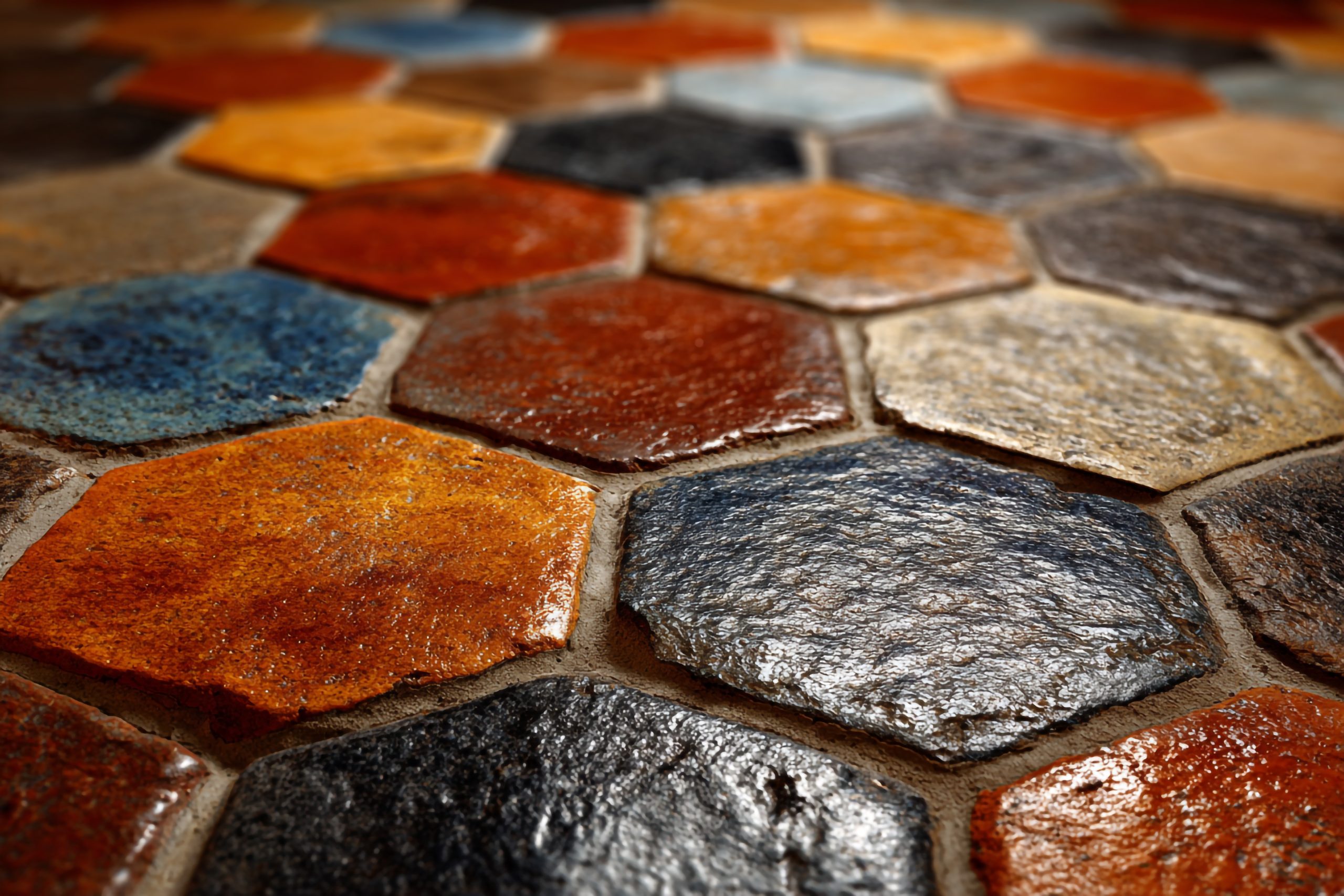
A wet look sealer deepens color and adds a rich, satin-to-gloss finish—similar to how pavers look right after rain. Reds become warmer, charcoals darker, and textures more pronounced.
Best Uses
- Driveways (dramatic curb appeal)
- Front walkways
- Decorative patios
- Low-splash pool surrounds
Pros
- Strong color enhancement
- Makes older or faded pavers look new
- Excellent stain resistance
- Can slightly harden the surface
Considerations
- Can be slippery when wet if non-slip additives aren’t used
- Gloss level may dull unevenly as it wears
- Not ideal for heavily shaded or constantly wet areas
Typical Lifespan
2–4 years, depending on traffic, sun exposure, and climate. Driveways may need resealing sooner than patios.
Natural Finish (Matte) Paver Sealer
Appearance
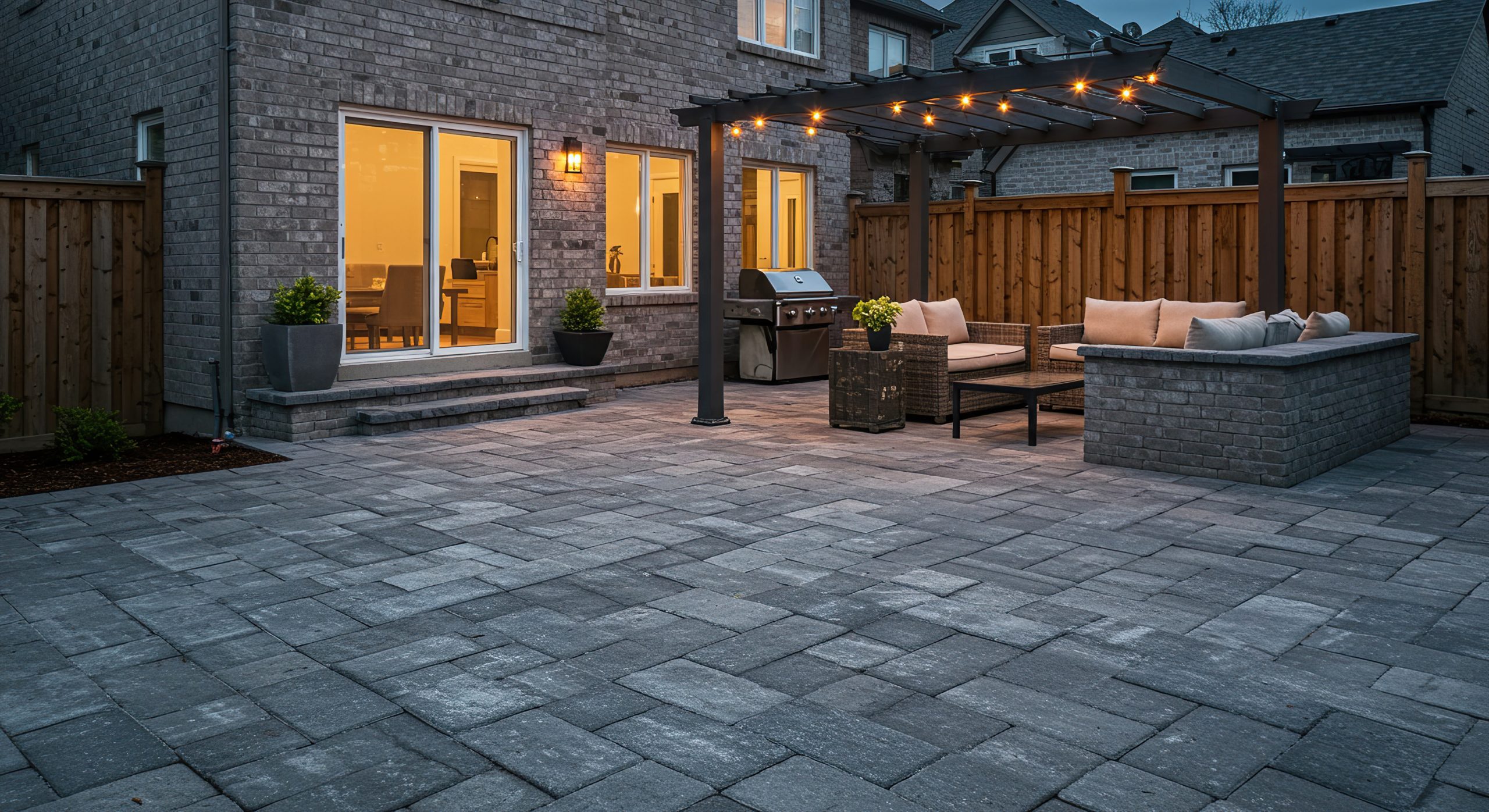
Natural finish sealers protect pavers without altering their original look. Color remains mostly unchanged, with a subtle, clean enhancement rather than shine.
Best Uses
- Pool decks
- Backyard patios
- Courtyards
- High-traffic walkways
Pros
- Maintains original, natural appearance
- Better slip resistance than gloss sealers
- Ideal for wet or barefoot areas
- More forgiving as it ages
Considerations
- Less dramatic visual impact
- Does not “hide” wear or fading as much as wet look sealers
Typical Lifespan
3–5 years, often longer than wet look sealers due to reduced surface buildup.
Slip Resistance: A Critical Factor
For any sealed surface—especially near pools—slip resistance matters.
- Wet look sealers should always include anti-slip additives
- Natural finish sealers are naturally more slip-resistant
- Proper surface prep (deep cleaning + correct joint sand) is just as important as the sealer itself
A professional application ensures safety without sacrificing performance.
Which Paver Sealing Option Is Right for You?
Choose a Wet Look Sealer if:
- You want bold color enhancement
- Curb appeal is a priority
- The area stays mostly dry
- You’re sealing decorative or statement areas
Choose a Natural Finish Sealer if:
- Safety and traction matter most
- The area gets wet frequently
- You prefer a subtle, timeless look
- You want longer maintenance intervals
Many homeowners opt for different sealers in different areas—wet look on the driveway, natural finish around the pool.
Sealing as Preventative Maintenance
Paver sealing works best before problems start. Regular sealing:
- Prevents deep staining
- Reduces costly repairs
- Keeps joint sand stable
- Extends the life of your entire hardscape
Waiting until pavers are damaged often means restoration costs instead of simple maintenance.
There’s no one-size-fits-all answer when it comes to paver sealing options. Wet look and natural finish sealers each have their place—it’s about matching the right product to the right surface and environment.
If you’re unsure, a professional evaluation can help determine:
- The condition of your pavers
- The best sealer type
- The ideal resealing schedule
Done right, paver sealing protects your home, enhances its beauty, and saves money long-term.